The best way to learn Mandarin Chinese as a second language is to start with the 3,000 most common characters
You can bypass a lot of challenges when learning mandarin by memorizing the 3,000 most common characters first.
The reason is that a cruel cycle traps many Mandarin language learners: you can’t read effectively because you don’t know enough characters, but you struggle to learn more characters because you can’t read enough to learn naturally.
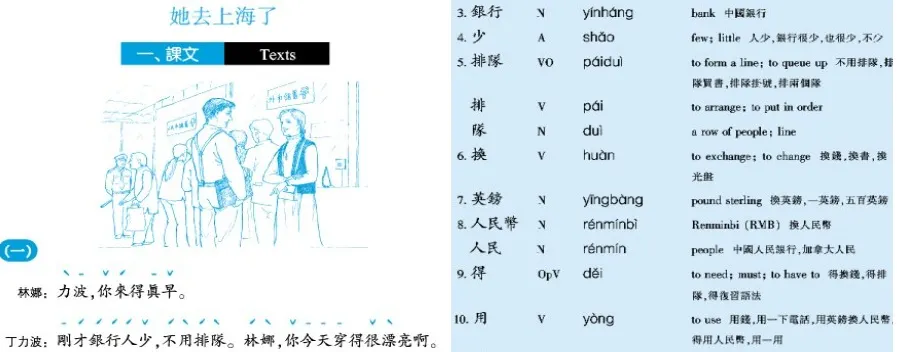
Traditional Chinese language classes don’t help much. Textbooks will teach dialogues such as “How to get to the library?” by throwing everything at you at once - Chinese tones, Chinese characters, pinyin to write a Chinese character in English, complex tone changes and sentences. It’s far too much information to take in at once (picture below).
Fortunately, there is a great series of books directed at foreign language learners that helps teach the 3,000 most common characters in a systematic way.
“Remembering the Hanzi” by James Heisig is perfect to help beginners memorize characters (picture below). The book is little more than a systematic arranging of common characters in an order best suited to remembering them. It coaches you to create stories to help you remember, recall, and practice. I personally found the method great to learn many characters quickly despite limited prior exposure to the language.
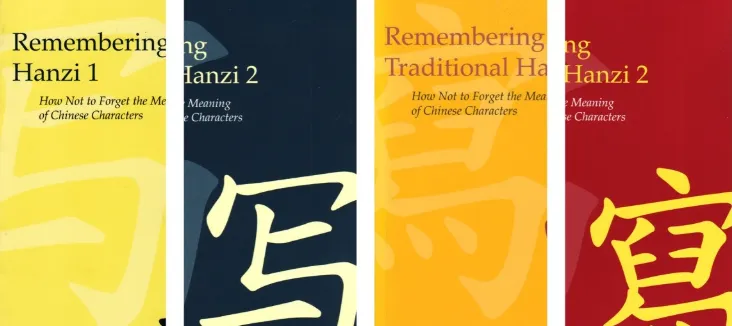
The aim of the book is for the novice learner to be able to read, recognise and write the 3,000 most common simplified characters. Some do it in 6 months, although personally it took me about 2 years of consistent study. If you also want to learn traditional Chinese characters at the same time, an additional 700 or so characters have to be learned. Together, that breaks down to roughly 4 characters per day over two years.
For those keen, you can also learn tones while following the Heiseig book by adding a tone colour to individual stories. Colors work as memory anchors because they create visual associations that stick in your mind. I found adding the following color elements to stories very helpful:
- First tone (high and level): Blue like the sky.
- Second tone (rising): Green like growing vegetation.
- Third tone (falling then rising): Brown like rolling hills.
- Fourth tone (sharp falling): Red like a sudden action.
- Fifth tone (no tone marking): no colour.
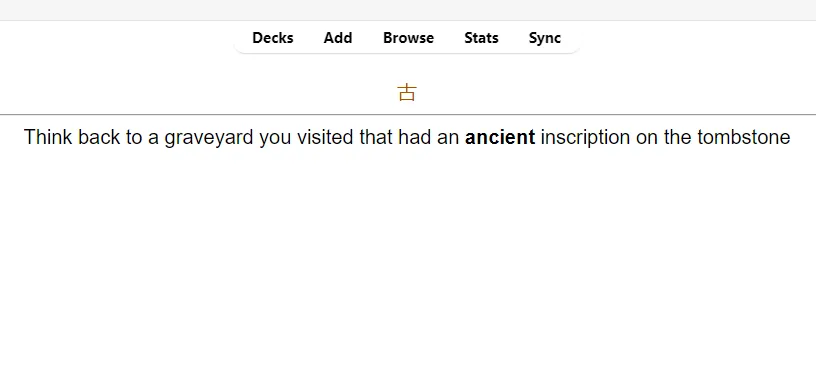
Anki is a software tool that is helpful for sequencing the learning of 3,000 characters using the Heiseig method. It is a simple digital flash card program that spaces out repetitions of characters and stories. It aims to put a flash card of a character you are learning in front of you just before you forget it, so you don’t forget (picture below). It’s invaluable to sequence the learning characters over months and years.
And that’s it! When you can comfortably recognize the most common 3,000 characters and their tones, you’ll be ready to tackle the rest of the language with gusto. Importantly, you will have bypassed one of the biggest challenges that derails many mandarin learners on their journey to fluency in the language.
Resources: